


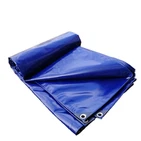


There are many common types of PE tarpaulins in the market, and people often pay attention to its quality rather than its color when purchasing. However, relevant professionals say that color also has a great impact on its quality. So what is the impact?
First of all, the tie dyeing of tarpaulin mostly uses masterbatch for film covering dyeing. Improper operation will cause tons of waste of raw materials and bring huge losses. This makes it more difficult. Therefore, it can be said that the beautiful and tidy color shows the strength of a tarpaulin factory and represents the quality of a tarpaulin factory's products.
Secondly, the tie dyeing difficulty coefficient of the tarpaulin is much higher than that of the cloth. Generally, small manufacturers cannot afford to use the tie dyeing production line, which is also the main reason for the single color of the tarpaulin. Most of the tarpaulins are made of high molecular polymers such as PE and polyethylene, which can not be tie dyed like cotton and linen fabrics, but more are dip dyeing processes. A production line needs nearly 2million, so the dyeing level determines the quality of the tarpaulins.
General guide for PE tarpaulin raw materials Korean cloth is coated with PE film on both sides of PE woven cloth, and polyethylene woven cloth is also used. The utility model has the advantages of light weight, cleanness and no pollution.